Major hurricanes regularly leave South Florida luxury properties across Boca Raton, Palm Beach, and Fort Lauderdale facing critical hurricane damage assessment decisions about storm-damaged trees. Property owners must quickly determine which trees can be saved through professional restoration and which pose ongoing risks that require immediate removal to protect property values and prevent liability issues.
The key to making informed decisions lies in professional hurricane tree damage assessment within the first 48-72 hours after a storm. When ISA Certified Arborists evaluate structural integrity, species-specific recovery potential, and safety risks, property owners can transform immediate post-storm challenges into manageable restoration plans that protect both their landscape investment and family safety.
Key Takeaways
- Safety first assessment protocols prevent injury and liability by identifying electrical hazards, hanging branches, and hidden structural damage before property inspection.
- Trees with decent canopy loss can often still be restored when root systems remain intact and trunk structure is sound, making professional evaluation crucial.
- Coconut palms show excellent hurricane recovery while royal palms have limited recovery potential due to their single growing point vulnerability.
- Live oaks demonstrate exceptional compartmentalization abilities and can regrow healthy crowns within several growing seasons after extensive damage.
- Professional ISA documentation is increasingly required by insurance companies for hurricane tree damage claims in high-value South Florida communities.
- Multiple cost factors beyond removal affect decisions, including tree size, damage extent, location access, permit requirements, and emergency timing considerations.
How Do You Safely Assess Hurricane Tree Damage in South Florida?
The moments right after a hurricane hits your Delray Beach or Coconut Creek property are crucial for ensuring safety and documenting damage for insurance claims. However, the temptation to immediately survey damage can expose South Florida homeowners to serious liability and safety risks that professional assessment protocols are designed to prevent.
Before approaching any damaged trees, follow these critical safety steps:
- Scan for Electrical Hazards: Downed power lines may be hidden beneath debris or foliage.
- Identify Hanging Branches: Partially severed limbs can fall without warning.
- Assess Structural Stability: Trees may appear stable while having compromised root systems.
- Check for Internal Damage: Cracks and splits often remain invisible to untrained observers.
Insurance companies increasingly require professional documentation for hurricane-related tree claims, particularly in high-value communities, where replacement costs can be substantial. DIY assessment often invalidates coverage or reduces claim payouts by failing to meet industry documentation standards.
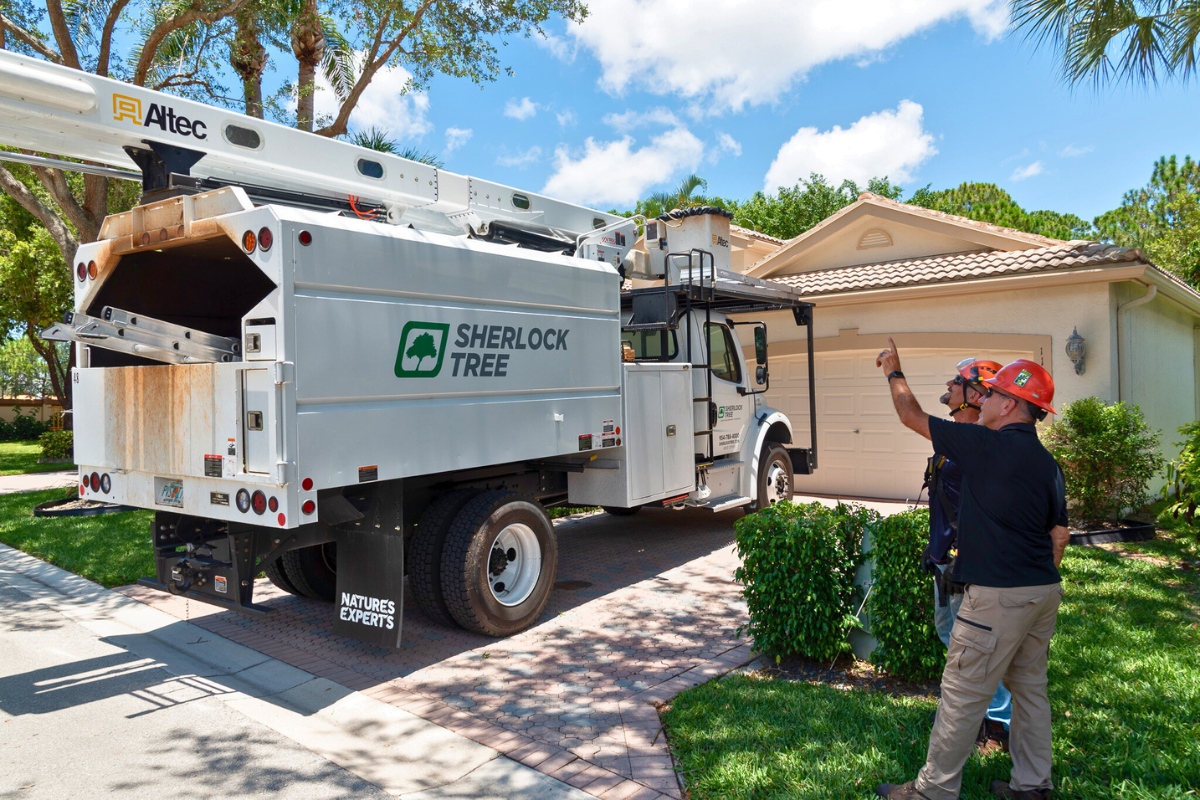
Expert Insight: “In our 50 years serving South Florida’s most prestigious communities, we’ve learned that the first 72 hours after a hurricane determine whether a property owner faces a manageable restoration project or a devastating insurance nightmare. Professional assessment isn’t just about the trees – it’s about protecting your entire investment.” – Jonathan Wolfson, Co-Owner, Sherlock Tree
Should You Remove or Save Hurricane-Damaged Trees in Broward and Palm Beach Counties?
Once safety hazards are addressed, property owners face the critical decision of whether hurricane-damaged trees can be successfully restored or require removal. This evaluation involves weighing restoration potential against long-term risks and costs to make informed decisions that protect both property values and ongoing safety.
For South Florida’s luxury property market, this decision carries significant financial implications. A mature live oak that required decades to establish may now represent substantial replacement value, making professional restoration economically sound when structural integrity remains intact. Conversely, a damaged tree threatening expensive outdoor living spaces or neighboring property requires immediate removal regardless of restoration potential.
When Hurricane-Damaged Trees Can Be Successfully Restored
Many trees that appear severely damaged after hurricanes can be successfully restored when they meet specific structural and biological criteria. Research from the USDA Forest Service shows that nearly 45% of hurricane-damaged forests experience rapid height recovery within 2-3 years following initial damage, particularly when root systems and trunk structure remain intact. Fortunately, professional crown reduction techniques can reshape damaged canopies while maintaining the tree’s natural growth patterns and wind resistance.
Trees qualify for restoration when they meet these criteria:
- Root System Integrity: Majority of the root ball remains in soil with minimal exposure.
- Trunk Soundness: No major cracks or hollow sections.
- Compartmentalization Ability: Species-specific healing responses.
- Growing Point Viability: Intact terminal buds and cambial layers.
The investment perspective is especially crucial for affluent Broward and Palm Beach County property owners. For example, a mature royal palm that cost several thousand dollars to install and required five years to establish its current canopy represents substantial replacement value. When professional assessment indicates good restoration potential, the investment in professional care often proves more economical than complete removal and replacement.
When Hurricane-Damaged Trees Require Immediate Removal
Certain types of hurricane damage, however, mandate immediate removal to protect property values and prevent catastrophic liability exposure:
- Compromised Root Systems: Extensive root ball exposure or damage beyond natural recovery capacity.
- Structural Failure: Major trunk cracks or lean exceeding 15 degrees.
- Safety Hazards: Trees threatening high-value structures or utilities.
- Municipal Compliance: Trees requiring emergency removal permits.
Insurance liability considerations become paramount when damaged trees threaten neighboring properties. Professional assessment provides the documentation needed to support removal decisions and protect against future claims.
Species-Specific Hurricane Recovery Considerations for South Florida Trees
Understanding how different South Florida tree species respond to hurricane damage helps property owners make informed decisions about restoration versus removal. Native species generally demonstrate superior recovery potential compared to exotic varieties commonly used in luxury landscaping.
Palm trees exhibit dramatically different recovery patterns:
- Coconut Palms (Cocos nucifera): Excellent wind resistance and recovery potential due to flexible trunks and multiple growing points.
- Royal Palms (Roystonea regia): Limited recovery potential because their single growing point makes them vulnerable to fatal damage.
- Date Palms (Phoenix dactylifera): Moderate recovery with proper post-storm care but require intensive monitoring.
Hardwood trees native to South Florida generally offer the best long-term restoration prospects:
- Live Oaks (Quercus virginiana): Exceptional compartmentalization and regrowth abilities, often recovering full canopies within 3-5 growing seasons.
- Bald Cypress (Taxodium distichum): Strong recovery potential with minimal intervention when root systems remain intact.
- Ficus Species: Fast regrowth but may develop weak branch attachments requiring ongoing monitoring.
However, hurricane damage can trigger lethal bronzing susceptibility in palms, so it’s important to schedule an immediate professional evaluation following an intense storm.
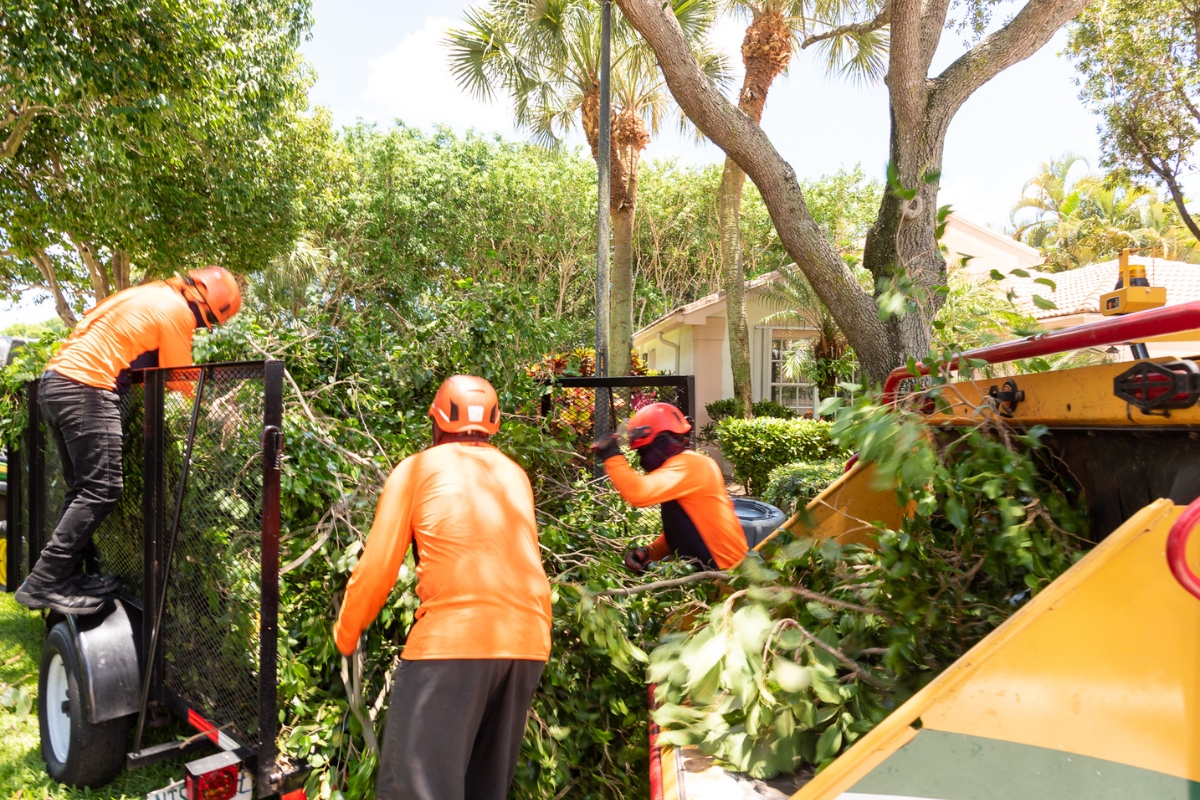
Why Skipping a Professional Tree Assessment Can Cost You More
Homeowners often focus on the immediate cost of tree work after a storm – but the bigger expense comes from what happens when you don’t call a professional. A Certified Arborist’s assessment can prevent costly chain reactions that affect your property, insurance, and long-term value.
Hidden costs of delaying a professional assessment include:
- Secondary Damage: Unstable trees causing additional property damage to pools, outdoor kitchens, or neighboring properties.
- Insurance Complications: Delayed reporting affecting claim approval or reducing payout amounts.
- Liability Exposure: Increased risk when visibly damaged trees remain untreated in dense luxury communities.
- Emergency Premiums: Higher costs for urgent removal services during peak demand periods.
- Municipal Fines: Penalties for unauthorized tree work that can reach thousands of dollars in communities with strict preservation ordinances.
The financial impact doesn’t stop there. Replacing a mature tree can take decades to restore the same shade, beauty, and property value. A professional assessment helps preserve not only your trees but also the design integrity and energy efficiency of your landscape.
Expert Insight: “The real cost of hurricane tree damage isn’t just what you pay upfront – it’s what you lose in property value and ongoing liability exposure when decisions are made without professional guidance. We help property owners see the complete financial picture.” – Jeff Sophir, Co-Owner of Sherlock Tree
Frequently Asked Questions About Hurricane Damage Tree Assessments in South Florida
How quickly do I need to make hurricane tree damage decisions for insurance purposes?
Insurance companies typically require damage notification within 48-72 hours of storm passage, with professional documentation submitted within 7-10 days. Delays can void coverage or reduce claim payouts, particularly for high-value properties where replacement costs are substantial.
What documentation do insurance companies require for hurricane tree damage claims?
Insurers require professional photographs showing damage extent, ISA Certified Arborist reports detailing structural assessment, species identification, restoration potential, and recommended actions.
Municipal permit documentation and contractor estimates must meet industry standards for claim approval.
Can hurricane-damaged trees become liability issues with my neighbors?
Yes, particularly in South Florida’s luxury communities where property damages can exceed six figures. Trees that show visible damage but remain untreated can expose property owners to negligence claims if they subsequently cause neighbor property damage or injury.
Do luxury communities have different tree removal regulations after hurricanes?
Many upscale HOAs and municipalities maintain stricter tree preservation requirements even after hurricanes. These communities often require professional assessments and restoration attempts before approving removal permits, particularly for specimen trees that contribute to neighborhood character.
How do I protect my property values when hurricane-damaged trees need removal?
Strategic replacement planning can maintain property values by selecting mature specimen trees for immediate installation. Professional landscape architects can recommend species that provide comparable aesthetic impact while offering superior hurricane resistance for long-term investment protection.
Protect Your Property Investment with a Professional Hurricane Damage Tree Assessment in South Florida
Don’t risk six-figure property damage or insurance claim disputes with DIY tree damage assessment. Sherlock Tree’s ISA Certified Arborists provide the expertise and documentation luxury property owners need to make informed decisions about hurricane-damaged trees.
As one of only 19 TCIA Accredited tree care companies in Florida, we’ve protected South Florida’s most prestigious properties for over 50 years.
Call 954-788-4000 or request an estimate online now for immediate hurricane tree damage assessment.

Call Sherlock for quality tree services
Whether you're looking for specific tree care services, such as palm trimming, tree removal, or disease treatments, or would like one of our Arborists to examine your trees to identify any issues and recommend options, we're always here for you! Just give us a call at 954-788-4000 to set up an appointment.

- « Previous
- 1
- 2
- 3
SEE MORE ARTICLES
Looking for more?
We've got you covered with a monthly newsletter full of tips, resources, updates, how-to's, and other helpful information about trees and landscapes in South Florida!
