In South Florida, trees have become part of a much bigger conversation than curb appeal. Concerns about canopy loss, urban heat, flooding, and redevelopment have sparked growing debate around unnecessary tree removals — especially in Miami-Dade County, where residents have recently pushed local officials to pause certain removals altogether. As more homeowners question when a tree truly needs to come down, attention is also shifting toward the qualifications of the people making those recommendations in the first place.
That puts more attention on the people doing the work. Not all tree companies operate with the same level of training, insurance, or arboricultural knowledge, and tree service credentials can tell you a lot about who actually understands proper tree care versus who just owns and operates a chainsaw.
Key Takeaways
- In Florida, tree trimming and tree removal companies are not licensed by the state, making professional credentials and verified insurance critical when hiring a tree service.
- TCIA Accreditation is a company-level credential — it means the entire business has been independently audited, not just one employee.
- The Prescription Pruning Qualification (PPQ) ensures pruning decisions are made by a qualified arborist before the crew ever climbs the tree, not delegated to whoever happens to be holding the chainsaw.
- Always request a Certificate of Insurance and call the insurer directly to confirm coverage is current and specific to tree care work.
Is a License Required for Tree Service Companies in Florida?
Under Florida House Bill 735, local governments can no longer impose occupational licensing requirements beyond what the state mandates, and Florida does not issue a statewide license for tree trimming or tree removal. As a result, there is now very little regulatory screening for companies performing tree work across much of the state.
Even when local licensing existed, it was only a basic threshold. It could help weed out the most obviously unqualified operators, but it did not guarantee proper training, arboricultural knowledge, adequate insurance, or adherence to industry standards. That makes tree service credentials, company accreditation, and verified insurance more important than ever when evaluating who should be trusted to care for (or remove) a tree on your property.
What Tree Service Credentials Should a Homeowner Look for Instead of a License?
The credentials that provide meaningful protection are ISA Certified Arborist designation (individual), TCIA Accreditation (company-level), the Prescription Pruning Qualification (process-level), and verified general liability and workers’ compensation insurance. Each evaluates a different aspect of competency and professionalism, which is why the most credible tree companies are typically the ones that can demonstrate all of them.
ISA Certified Arborists Are the Industry Standard for Professional Tree Care
Not everyone offering tree work has formal arboricultural training. In Florida, anyone can advertise tree trimming or tree removal services regardless of education, experience, or certification. That is what makes the ISA Certified Arborist credential so important.
To earn it, a candidate must complete at least three years of documented field experience and pass a 200-question exam covering tree biology, pruning science, disease management, risk assessment, and safe work practices. The certification must also be renewed every three years through continuing education.
Work directed by an ISA Certified Arborist is grounded in arboricultural science rather than guesswork. The person making recommendations understands how trees grow, how they fail, and how improper pruning or unnecessary removals can create long-term structural and health problems. ISA credentials are publicly verifiable through Trees Are Good, allowing homeowners to confirm an arborist’s certification before hiring a company.
TCIA Accreditation Verifies the Entire Company, Not Just One Employee
An ISA Certified Arborist credential tells you about the qualifications of an individual. TCIA Accreditation evaluates the company as a whole. To earn accreditation, a tree care company must undergo an independent third-party audit reviewing its safety programs, employee training, equipment maintenance, insurance coverage, and business operations. The process is not self-reported — outside auditors verify that the company meets industry standards.
Fewer than 10% of U.S. tree care companies hold TCIA Accreditation, and companies must renew it every three years to maintain their status. Accreditation also requires proper insurance coverage as part of the process, adding another layer of accountability for homeowners hiring tree care services. A company’s accreditation status can be verified through TCIA.
The Prescription Pruning Qualification (PPQ) Helps Prevent Improper Tree Pruning
The Prescription Pruning Qualification (PPQ), offered through the Florida Chapter of the ISA, is designed to ensure pruning decisions are made by a qualified arborist before any cutting begins. A PPQ holder creates a documented pruning prescription outlining which branches should be removed, reduced, or preserved, and the crew performs the work according to that plan.
That distinction matters because improper pruning can create long-term structural defects, decay, and unnecessary stress that may not become obvious for years. The PPQ framework is based on research from Dr. Ed Gilman at the University of Florida and aligns with ANSI A300 pruning standards. Sherlock has four PPQ holders on staff, meaning pruning plans are developed before crews arrive on site.
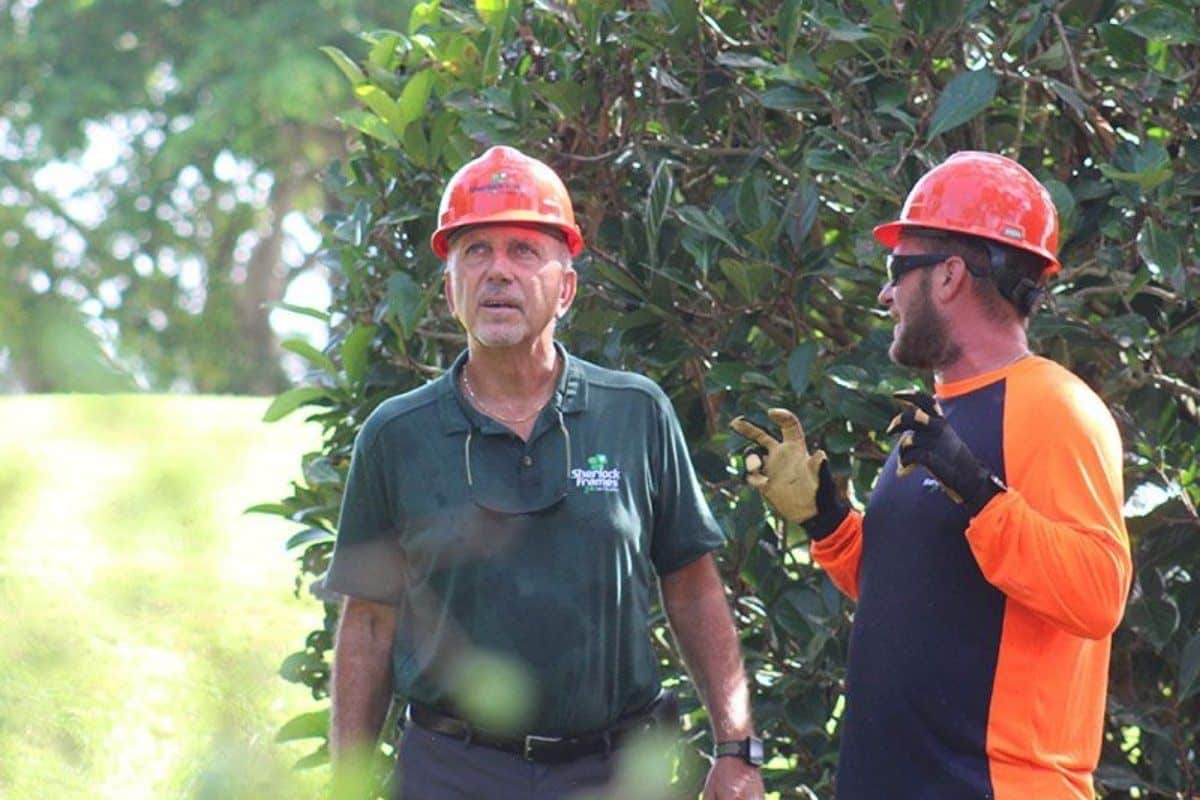
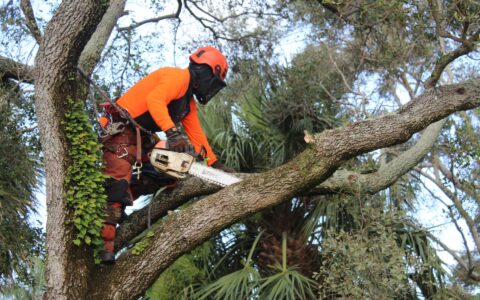
TRAQ-certified arborists receive advanced training in evaluating tree defects, structural stability, and potential risk factors.
TRAQ Certification Provides Advanced Training in Tree Risk Assessment
The Tree Risk Assessment Qualification (TRAQ), developed by the International Society of Arboriculture (ISA), provides specialized training in evaluating tree defects, structural stability, site conditions, likelihood of failure, and potential consequences of impact. TRAQ-qualified arborists follow a standardized methodology for assessing tree risk rather than relying on subjective opinion or overly cautious assumptions.
This level of assessment is particularly important when determining whether a tree can be preserved through pruning, support systems, or monitoring — or whether removal is warranted due to an unacceptable level of risk. In South Florida, where hurricanes, saturated soils, and high wind exposure place additional stress on trees, a formal risk assessment helps homeowners make informed decisions grounded in arboricultural standards rather than speculation.
Verified Insurance Protects Homeowners from Property Damage and Injury Liability
Two types of insurance should be considered non-negotiable when hiring a tree company: general liability insurance and workers’ compensation insurance. General liability covers damage to your home or property, while workers’ compensation covers injuries to employees working on your property. Without both, homeowners can be exposed to significant financial and legal risk if something goes wrong during the job.
It is also important to confirm the policy specifically covers tree care operations — not just general landscaping work. Tree removal, aerial climbing, rigging, and crane work carry substantially higher risk than routine lawn maintenance. Instead of simply accepting a PDF certificate, request a current Certificate of Insurance and call the insurance carrier directly to verify the coverage is active and applicable to tree work.
Frequently Asked Questions About Tree Service Credentials
Can a tree company be ISA Certified Arborist but not TCIA accredited?
Yes — and it’s common. ISA certification is held by individuals; TCIA accreditation is held by the company. A company can employ an ISA Certified Arborist without ever undergoing the company-level audit TCIA requires. Both credentials together tell you the individual and the operation have been vetted.
Does Florida require any state license for tree trimming or removal?
No. Florida has no state-level licensing requirement for tree trimming or removal, and since House Bill 735 took effect in July 2025, local governments cannot impose their own. Voluntary credentials are now the only standard separating qualified companies from unqualified ones.
What is ANSI A300 and why should it appear in my estimate?
ANSI A300 is the American National Standard for tree care operations — the industry benchmark for pruning, removal, fertilization, and risk assessment. A qualified company will reference A300 standards in its scope of work. If the estimate makes no mention of it, the crew may not be following any documented standard at all.
What is the difference between a tree service and a certified arborist?
A tree service is a company performing tree work, while a certified arborist is an individual who has met professional experience requirements and passed an industry certification exam through the International Society of Arboriculture (ISA). Not every tree company employs Certified Arborists.
For a Tree Service With the Right Credentials, Call Sherlock Tree
In Florida, homeowners can no longer rely on local licensing requirements to separate qualified tree companies from unqualified ones. That makes professional credentials, company accreditation, and verified insurance more important than ever.
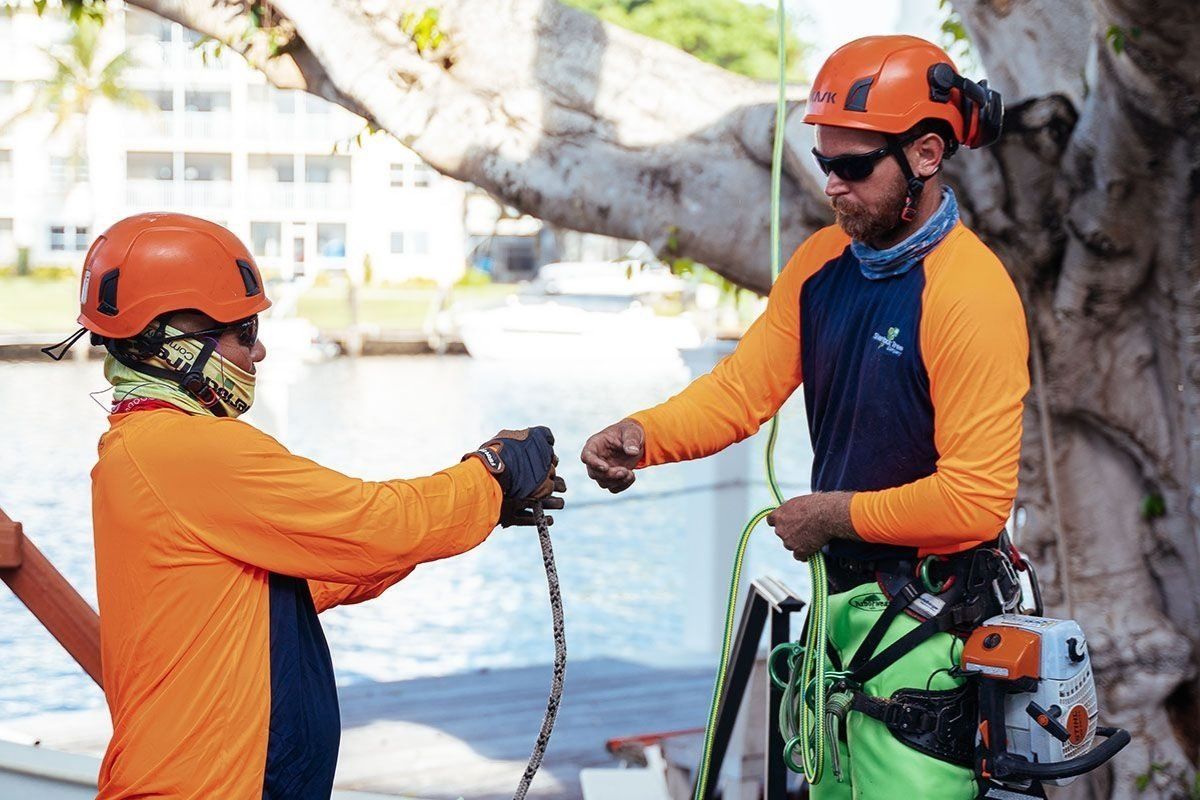
Sherlock’s credential stack was built to provide multiple layers of accountability: ISA Certified Arborists overseeing recommendations, TCIA Accreditation verifying company-wide standards, PPQ holders developing pruning prescriptions before work begins, CTSP-certified safety leadership, and fully verified insurance coverage specific to tree care operations. Homeowners across Boca Raton, Delray Beach, Boynton Beach, and the surrounding South Florida communities can schedule a free estimate today by calling 954-480-1735.

Call Sherlock for quality tree services
Whether you're looking for specific tree care services, such as palm trimming, tree removal, or disease treatments, or would like one of our Arborists to examine your trees to identify any issues and recommend options, we're always here for you! Just give us a call at 954-788-4000 to set up an appointment.
SEE MORE ARTICLES
Looking for more?
We've got you covered with a monthly newsletter full of tips, resources, updates, how-to's, and other helpful information about trees and landscapes in South Florida!
