Palms across Lighthouse Point, Deerfield Beach, and Pompano Beach are still recovering from back-to-back weekends of temperatures in the low 30s and high 20s — brown-tipped fronds, slowed growth, and canopies that haven’t bounced back. Now, heading into peak trimming season, landscape crews are offering “hurricane cuts” and aggressive canopy reductions that sound like a fix. But bad palm pruning is one of the fastest ways to shorten a palm’s life, and palms already weakened by cold stress are even more vulnerable.
The damage goes deeper than appearance: overpruned palms are structurally weaker, more disease-prone, and harder to save. Here’s how to recognize the warning signs and evaluate whether your trimmer is qualified to do the job right.
Key Takeaways
- Hurricane cuts, pencil pointing, and trunk shaving cause structural and health damage that’s often irreversible.
- Removing green or yellowing fronds strips the palm’s food source and worsens nutrient deficiencies.
- Unsanitized pruning tools can spread fatal diseases, like Fusarium wilt and Thielaviopsis trunk rot, from palm to palm.
- Proper palm pruning sticks to the 9-to-3 rule — only removing lower, dead fronds — and includes sanitizing tools between trees to avoid spreading disease.
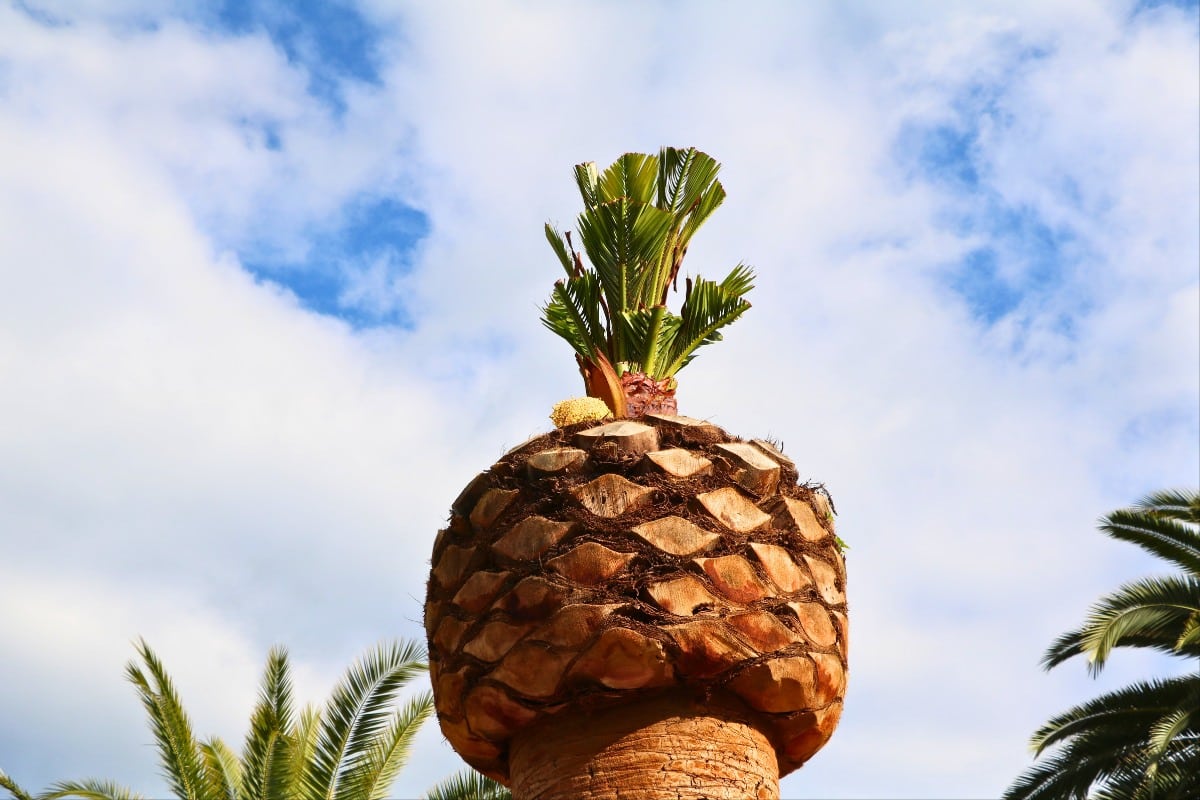
The “pineapple cut” carves boot stubs into a decorative diamond pattern — but every cut is a fresh wound that invites fungal disease into the trunk.
What Does Bad Palm Pruning Actually Look Like?
Bad palm pruning shows up in three common patterns: hurricane cuts that strip the canopy, pencil pointing that narrows the trunk, and trunk shaving that removes protective bark.
Hurricane Cuts Strip the Canopy Down to a Spike
A hurricane cut strips all but a few fronds at the top of the palm, leaving a thin “rooster tail” silhouette — a narrow spike of fronds sticking straight up instead of a full, round canopy. The name implies wind protection, but field observations after multiple hurricane landfalls found the opposite: hurricane-cut palms were more likely to lose their crowns than those that were not pruned at all.
Pencil Pointing Creates a Permanent Weak Point
Unlike hardwood trees that add new layers of wood each year, palms don’t grow outward — their trunks stay the same diameter for life. So, when repeated overpruning narrows the trunk, it stays that way. That narrowed section — called a pinch point because the trunk visibly pinches inward like a squeezed bottle or a pencil — becomes a permanent structural weak point prone to snapping in high winds.
Trunk Shaving and “the Pineapple Cut” Remove Natural Protection
Trunk shaving strips away old leaf bases — called boots — that shield the trunk from sun damage, moisture loss, and fungal infections. This practice strips them off for a “clean” look, while the pineapple cut takes it a step further — carving the remaining boot stubs into a diamond-shaped pattern that resembles a pineapple rind. The result is fresh wounds across the entire trunk that become direct entry points for disease.
Why Does Overpruning Damage Your Palms?
Overpruning triggers a chain of stress that weakens palms from the inside out. Palms have a single terminal bud at the top of the trunk; if it dies, the palm dies. Every green frond protects this bud while producing energy through photosynthesis. Each frond removed means less energy, forcing the palm to burn stored reserves to push out new growth — a repeating stress cycle that worsens with every trim.
Yellowing Fronds Are Recycling — Not Dying
Potassium is mobile within the palm, so when the root system can’t pull enough from the soil, the palm reclaims it from older fronds — that’s what the yellowing actually is. Removing those yellowing fronds accelerates the deficiency instead of fixing it. This is especially common along coastal Broward, where sandy soils in Hallandale Beach, Hollywood, and Sea Ranch Lakes leach potassium fast, and salt exposure compounds the stress.
The fix is proper fertilization and addressing the underlying potassium deficiency — not more pruning.
DID YOU KNOW? The standard guideline for pruning palm trees is the “9-to-3 rule.” Imagine the palm canopy as a clock: the fronds at the 9 and 3 positions form a horizontal line, and anything at or above that line should not be removed. In Broward County, violating this rule is considered a civil offense under the tree trimmer licensing ordinance.
How Can Bad Pruning Spread Fatal Palm Diseases?
Bad pruning spreads disease through contaminated tools touching fresh wounds — every unsterilized cut is an opportunity for pathogens, like Fusarium wilt and Thielaviopsis trunk rot, to enter through fresh cuts and travel from palm to palm on contaminated tools.
Fusarium Wilt Spreads on Contaminated Pruning Tools
Fusarium wilt is a fatal vascular disease with no cure — first confirmed in South Florida in 2003 on queen palms, a species in nearly every neighborhood from Lighthouse Point to Pompano Beach. The pathogen lives in infected palm tissue, and contaminated pruning equipment carries it directly into the next palm on the route.
The disease is particularly dangerous because an infected palm can appear healthy for months before the signature symptom shows up: one-sided wilt, where leaflets on one side of a frond discolor and die while the other side stays green. That’s why pruning tools need a full disinfectant soak between every palm trimming.
Thielaviopsis Trunk Rot Enters Through Fresh Wounds
Thielaviopsis trunk rot is a fungal disease that enters through a fresh wound (created by trunk shaving, improper frond removal, climbing spikes, etc.) and decays the palm’s trunk from the inside out.
What makes Thielaviopsis especially dangerous is that the trunk can look perfectly healthy on the outside while the interior is already compromised — often with no visible warning until the trunk collapses or the canopy drops. It affects a wide range of palm species across South Florida, and by the time damage is visible, the palm is typically beyond saving.
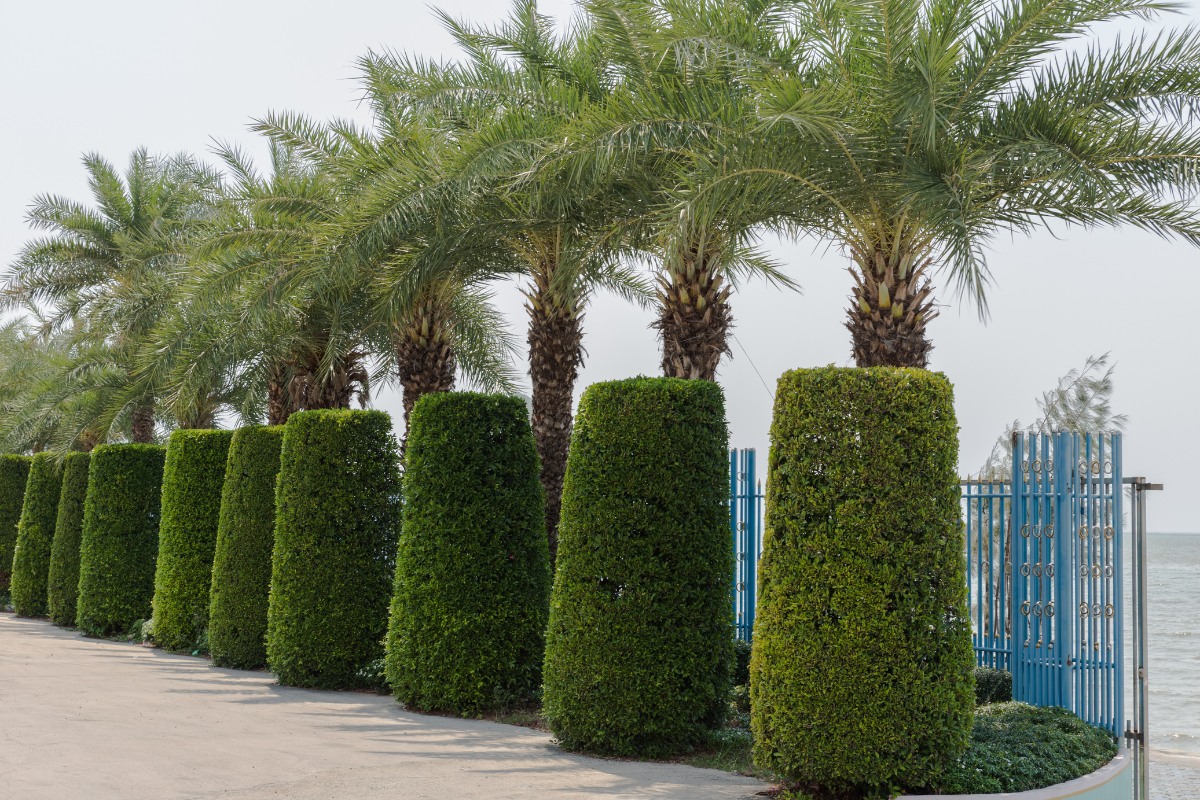
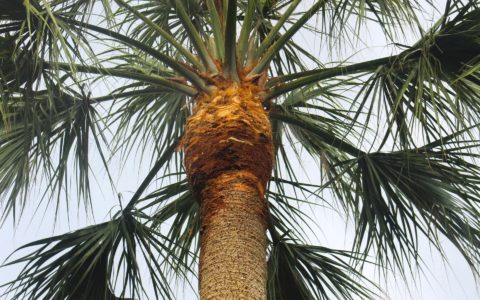
Properly pruned palms maintain a full, rounded canopy — a clear contrast to the stripped silhouettes left by hurricane cuts and overpruning.
What Does Proper Palm Pruning Look Like?
Proper palm pruning removes only what’s dead or broken while keeping the full living canopy intact. Here’s what that entails:
- Only dead, brown, or broken fronds are removed — never green or yellowing fronds
- The 9-to-3 rule is followed: no fronds above the horizontal plane are cut
- Tools are sanitized between every palm with a disinfectant soak
- The canopy maintains a full 360-degree round shape after trimming
- Boots and trunk material are left in place
- Climbing spikes are avoided — they puncture the trunk and create entry points for disease
However, it’s important to know that not all palms need the same level of care. Some species, like royal palms and Christmas palms, are considered “self-cleaning” because they shed dead fronds on their own and rarely need trimming, and most native South Florida palms are similarly low-maintenance. Meanwhile, queen palms need more frequent attention and coconut palms may need fruit removal for safety — though frond removal should still be minimal for both.
Understanding what proper palm trimming actually looks like makes it easier to recognize when a crew is cutting corners and when they’re trimming your trees with science-backed methods.
How Can You Tell if Your Palm Trimmer Is Qualified?
The fastest way to evaluate a palm trimmer is to ask targeted questions before any work begins:
- What’s your pruning approach? They should reference the 9-to-3 rule and confirm they’ll leave green fronds in place. If they offer a “hurricane cut,” walk away.
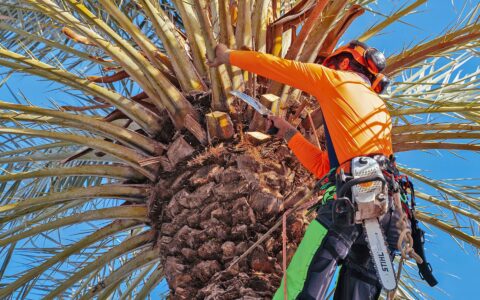
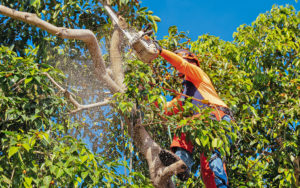
- How do you sanitize tools? The answer should be between every palm, using a disinfectant soak — not a quick wipe between properties. Chainsaws and pole saws are nearly impossible to properly soak, which is why qualified crews use hand saws for palm pruning.
- Do you have a Broward County Tree Trimmer License? County ordinance requires it for anyone pruning trees in Broward County. Ask for the license number.
- Is there an ISA Certified Arborist on staff? This is the baseline professional credential in arboriculture, requiring a comprehensive exam and ongoing continuing education.
- Does anyone hold a Prescription Pruning Qualification (PPQ)? This Florida ISA Chapter credential shifts pruning from crew-level judgment calls to prescribed, objective-based plans built on research done at the University of Florida.
- Is the company TCIA accredited? Tree Care Industry Association accreditation requires rigorous safety, training, and business practice audits — only 19 companies in Florida currently hold it.
PRO TIP: If a company uses prescribed pruning plans — written specifications for each palm based on species, condition, and growth objectives — that’s a strong signal they take the work seriously. It means pruning decisions aren’t left to individual crew members on the spot.
Frequently Asked Questions About Bad Palm Pruning
Can overpruned palms recover?
It depends on the severity. Palms can regrow fronds if the terminal bud is intact, but pencil pointing — permanent trunk narrowing from chronic overpruning — is irreversible. Recovery requires proper fertilization, no further overpruning, and patience.
Should I let my landscaper trim my palms?
Many landscape crews trim palms as part of routine service, but most aren’t trained in palm-specific pruning standards. If your landscaper can’t explain the 9-to-3 rule or doesn’t sanitize tools between palms, hire a company with an ISA Certified Arborist on staff instead.
Should palm trimmers use climbing spikes?
No. Climbing spikes might be faster than a bucket truck or ladder, but they puncture the trunk with every step. Those punctures then become entry points for infections like Thielaviopsis trunk rot. Reputable palm trimmers avoid spikes entirely.
What should I do if my palm trimmer already damaged my palms?
Stop any further pruning immediately and have a Certified Arborist assess the damage. Depending on the severity, the arborist may recommend a fertilization plan to support recovery, monitoring for signs of disease, or in the worst cases, removal before the palm becomes a safety hazard.
How much does it cost to fix a badly pruned palm?
It depends on the type and severity of the damage. A palm that’s been overpruned once may recover with proper fertilization and time, while pencil pointing or disease from unsanitized tools can mean the palm is beyond saving. The real cost is often the full removal and replacement of a palm that didn’t need to die — which is why hiring a qualified trimmer upfront is the best investment.
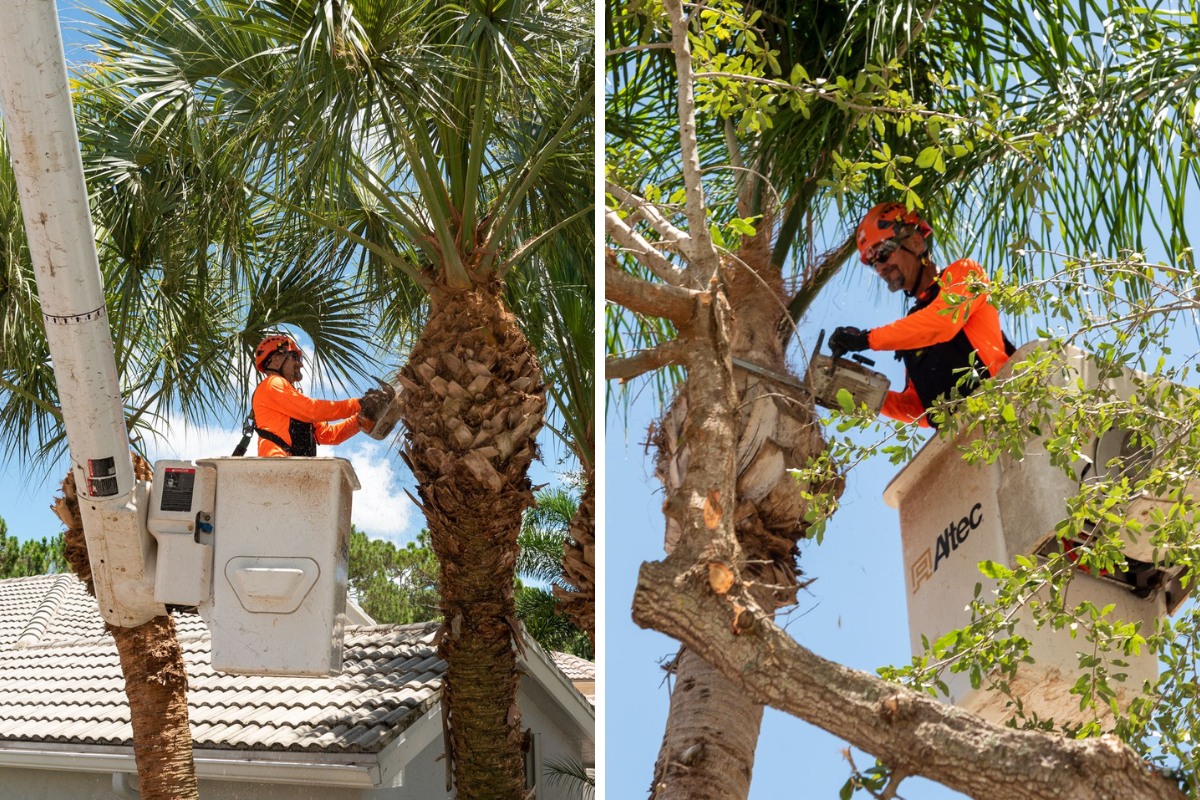
A Sherlock Tree Company crew uses a bucket truck to safely prune a palm at a South Florida home — no climbing spikes, no trunk damage.
Protect Your Palms With Professional Pruning Before Hurricane Season
The damage from bad palm pruning is often irreversible — but it’s also entirely preventable when you know what to look for and who to trust with the work.
Sherlock Tree Company has been caring for South Florida’s trees for over 50 years. Our team includes ISA Certified Arborists, Prescription Pruning Qualification (PPQ) holders, and a Certified Treecare Safety Professional (CTSP) — backed by TCIA accreditation. If your palms already show signs of damage, or you want them evaluated before hurricane season, request an estimate or call 954-480-1735.
We’ll make sure your palms are healthy, safe, and ready for whatever the season brings.

Call Sherlock for quality tree services
Whether you're looking for specific tree care services, such as palm trimming, tree removal, or disease treatments, or would like one of our Arborists to examine your trees to identify any issues and recommend options, we're always here for you! Just give us a call at 954-788-4000 to set up an appointment.

SEE MORE ARTICLES
Looking for more?
We've got you covered with a monthly newsletter full of tips, resources, updates, how-to's, and other helpful information about trees and landscapes in South Florida!
