
Last year’s hurricane season was exceptionally quiet in South Florida, marking the first hurricane-free season in a decade for the state. And while it’s still too early to know how this season will play out, it’s never too early to prepare. Overgrown canopies, dead limbs, and weak branch structure don’t fix themselves – and they’re often what cause the most damage in high winds.
Key Takeaways
- Hardwood trees benefit from interior thinning that allows wind to move through the canopy while removing structural defects like codominant stems and deadwood.
- The “hurricane cut” is a harmful myth that weakens palms by reducing photosynthesis and removing the fronds that protect the terminal bud during high winds.
- All hurricane prep – inspections, pruning, and removals – should be completed between March and May, before the season begins.
- Preparing your trees ahead of hurricane season costs far less than dealing with emergency removal and storm damage cleanup after the fact.
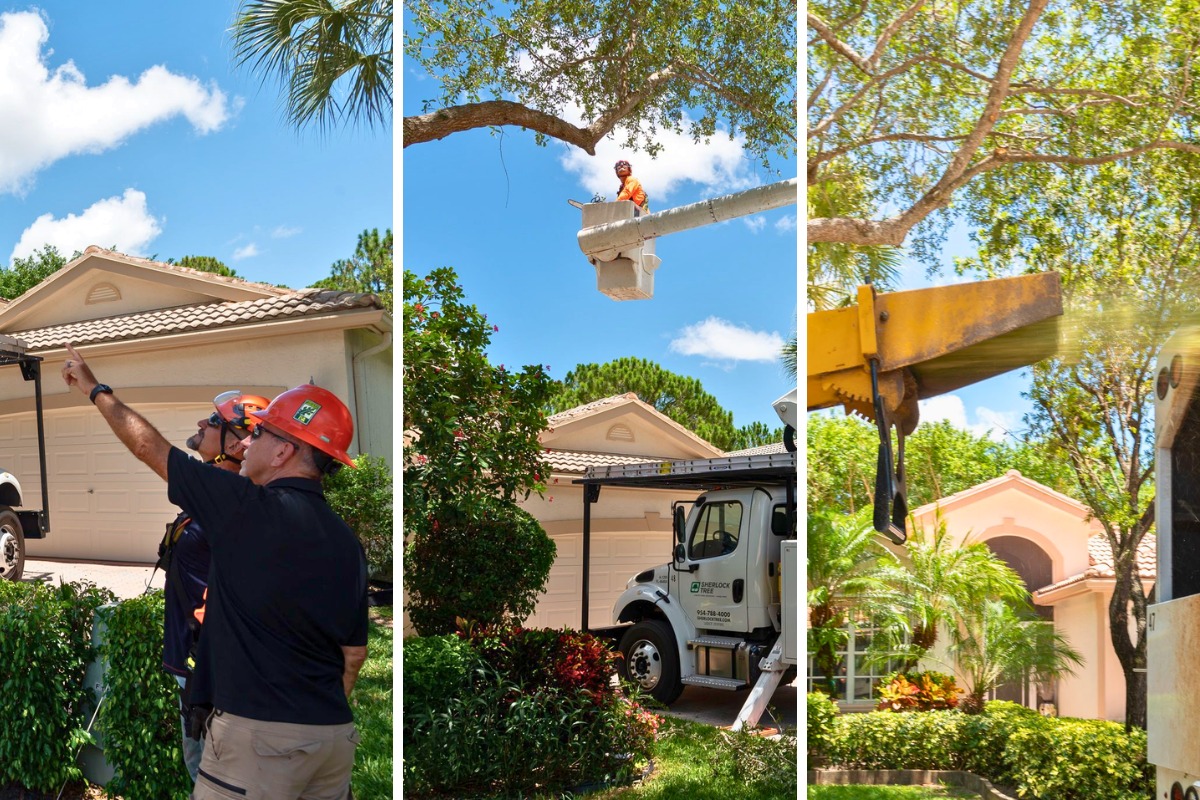
From inspection to pruning to large-scale removals, hurricane preparation involves multiple steps that should be completed well before June 1.
How Do I Prepare My Trees for Hurricane Season?
Preparing your trees for hurricane season involves four essential steps: professional inspection to identify hidden problems, strategic pruning for both hardwoods and palms, removing trees that can’t be saved, and completing all work before June 1.
Schedule a Professional Tree Inspection
A professional tree inspection by an ISA Certified Arborist identifies structural weaknesses, decay, and root problems that make trees vulnerable to hurricane-force winds.
Schedule your inspection in March or early April, before pruning work begins. Trees over 15 feet require professional evaluation, as you can’t properly assess structural problems or canopy density from ground level. And if there’s a specific tree you’re concerned about from a safety standpoint, a professional tree risk assessment provides a more detailed evaluation with documented findings and clear recommendations.
Prune Hardwood Trees for Wind Resistance
Proper hurricane preparation for hardwood trees focuses on interior thinning and removing structural defects – not heavy cutting. The goal is to reduce wind resistance without over-pruning, which can weaken the tree. Interior thinning helps wind move through the canopy instead of pushing against it.
When an arborist notices the signs your trees need pruning, they will typically remove:
- Deadwood throughout the canopy
- Codominant stems creating V-shaped unions and weak split points
- Branches with cracks or diameters equal to the trunk
- Weak, overextended limbs
- Interior branches to reduce density
Always work with a professional tree service that will follow industry standards for your trees. Pruning is best when it is light and targeted to prevent hurricane damage, rather than removing an excessive amount of the canopy.
Prepare Palm Trees with Precise Pruning
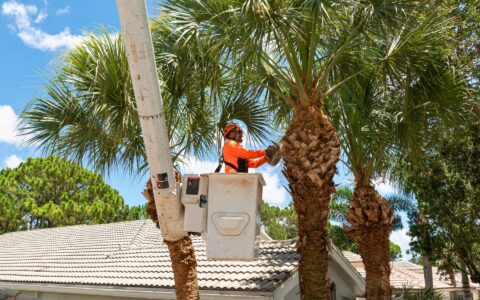
Proper palm preparation means removing only dead fronds and palm boots – never the “hurricane cut.” This outdated practice strips away green fronds, which reduces the palm’s ability to photosynthesize and removes the layers that help protect the terminal bud in high winds.
Instead, professional tree companies follow industry standards for palm pruning, which includes:
- Remove only completely brown and dead fronds
- Remove dead palm boots that can become projectiles
- Follow the 9 o’clock to 3 o’clock rule: never remove fronds above horizontal
- Leave yellow/browning fronds with some green
- Sterilize tools between palms
Professional pruning and trimming services maintain natural defenses that help these trees survive hurricanes.
Remove Dangerous Trees Before Storm Season
Trees with extensive decay, severe structural damage, or a dangerous lean should be removed before hurricane season, rather than attempting to save them. These trees have too much damage to survive and removing them now is much more economical than doing it after a storm brings them down.
If you do have to remove a tree because it is dead or too dangerous to remain standing, consider planting a hurricane-resistant tree to replace it. Some species we recommend include:
- Sand live oak (Quercus geminata)
- American holly (Ilex opaca)
- Southern magnolia (Magnolia grandiflora)
- Live oak (Quercus virginiana)
- Wax myrtle (Myrica cerifera)
- Sweetgum (Liquidambar styraciflua)
- Crape myrtle (Lagerstroemia indica)
- Dogwood (Cornus florida)
- Sabal palm (Sabal palmetto) — Florida’s state tree
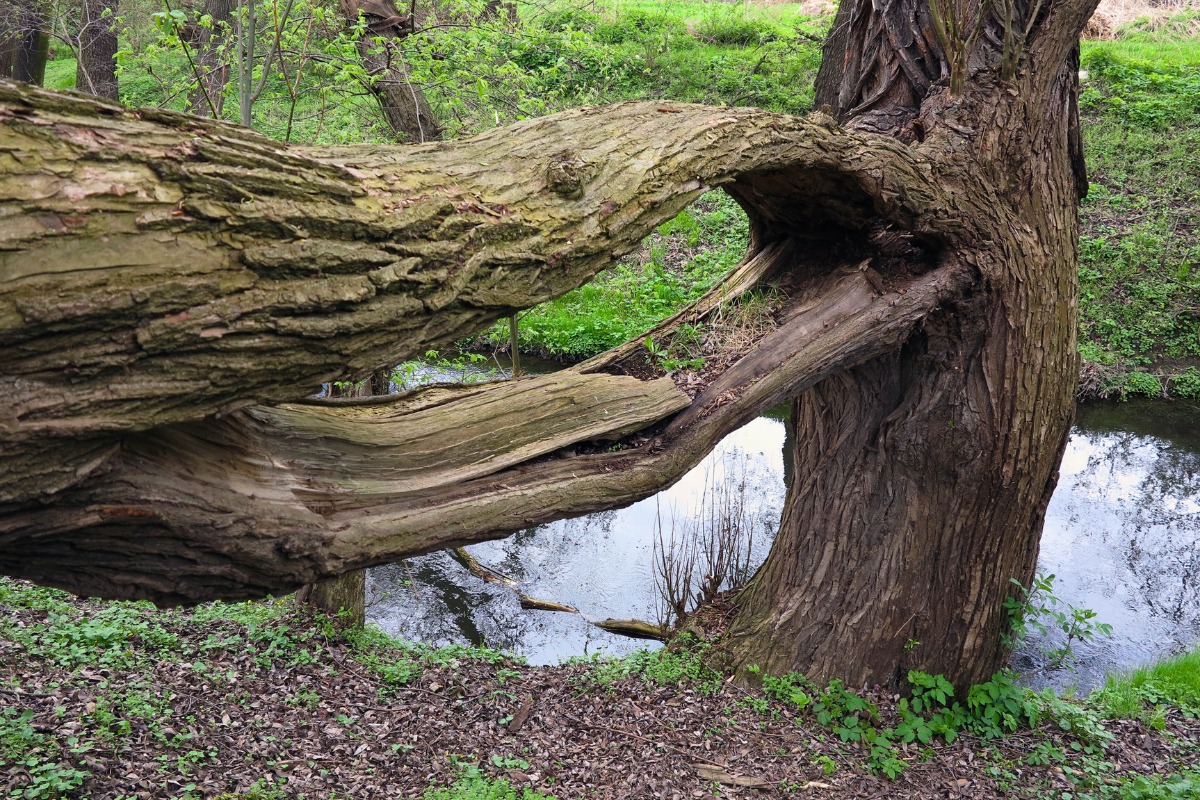
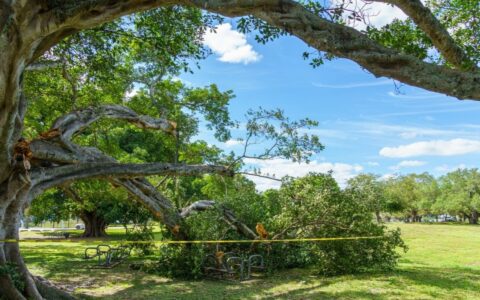
Structural defects like this major trunk split are exactly what a professional inspection is designed to catch before hurricane season.
What Are the Warning Signs My Trees Could Fail During a Hurricane?
Homeowners can identify many warning signs from ground level. If you spot any of these indicators, contact an ISA Certified Arborist for evaluation:
- Decay and Disease Indicators: Shelf fungus or mushrooms growing on the trunk or limbs signal internal decay. Other red flags include cavities or hollow-sounding trunks, soft or crumbling bark, carpenter ants or termite activity, and oozing sap or bark staining.
- Structural Warning Signs: Codominant stems that create V-shaped trunk splits are the most worrisome, as these weak attachment points commonly fail during hurricanes. You should also look for visible cracks in the trunk or major branches, leaning trees (especially recent lean), root flare that’s not visible at the soil line, and exposed, severed, or girdling roots around the base.
- Crown and Canopy Issues: Look for broken or hanging limbs caught in the tree, extensive dead branches throughout the canopy, and sparse or thinning foliage on one side. Wilting or discolored leaves despite adequate water can indicate root problems. For palms, a damaged or dying spear leaf (the center frond) is a critical warning sign.
How Does Proper Pruning Make Trees More Hurricane Resilient?
Proper pruning reduces wind resistance by allowing air to pass through the canopy while removing weak points, like codominant stems and deadwood, that would otherwise fail under hurricane-force winds. Here’s how it protects your trees:
- It Reduces the Sail Effect: Interior thinning allows wind to pass through the canopy rather than pushing against a solid mass of branches and foliage, dramatically reducing force on the trunk and root system.
- It Improves Weight Distribution and Structural Balance: Removing overextended limbs and correcting lopsided canopies makes trees less likely to uproot or split during high winds.
- It Prevents Catastrophic Trunk Splitting: Removing codominant stems eliminates the most common failure point in South Florida hardwood trees during hurricanes.
- It Eliminates Dangerous Projectiles: Deadwood removal gets rid of brittle branches that snap easily and become dangerous missiles capable of breaking windows, damaging roofs, or injuring people.
When Should I Prepare My Trees for Hurricane Season?
The best time to prepare your trees is early spring, from March through May. This gives trees time to recover from pruning while conditions are still safe for crews to work and well before hurricane season begins.
Plan to schedule inspections in March or early April, complete any pruning or removals by early May, and use late May for final checks. Avoid waiting until a storm is approaching, as tree work during a Hurricane Watch or Warning is unsafe, ineffective, and debris won’t be picked up in time.
Frequently Asked Questions Preparing Trees for Hurricane Season
Should I remove palm fronds before hurricane season?
Only remove completely brown and dead palm fronds; never remove healthy green fronds in a “hurricane cut.” Removing green fronds weakens palms and makes them more vulnerable to wind damage.
When is hurricane season in South Florida?
Hurricane season runs from June 1 through November 30, with peak activity being between August and October. Early spring is the ideal preparation window before the season begins.
Can I prepare my own trees for hurricane season?
Homeowners can inspect trees from ground level and remove small dead branches, but any work requiring ladders or affecting trees over 15 feet should be done by ISA Certified Arborists with proper equipment and training.
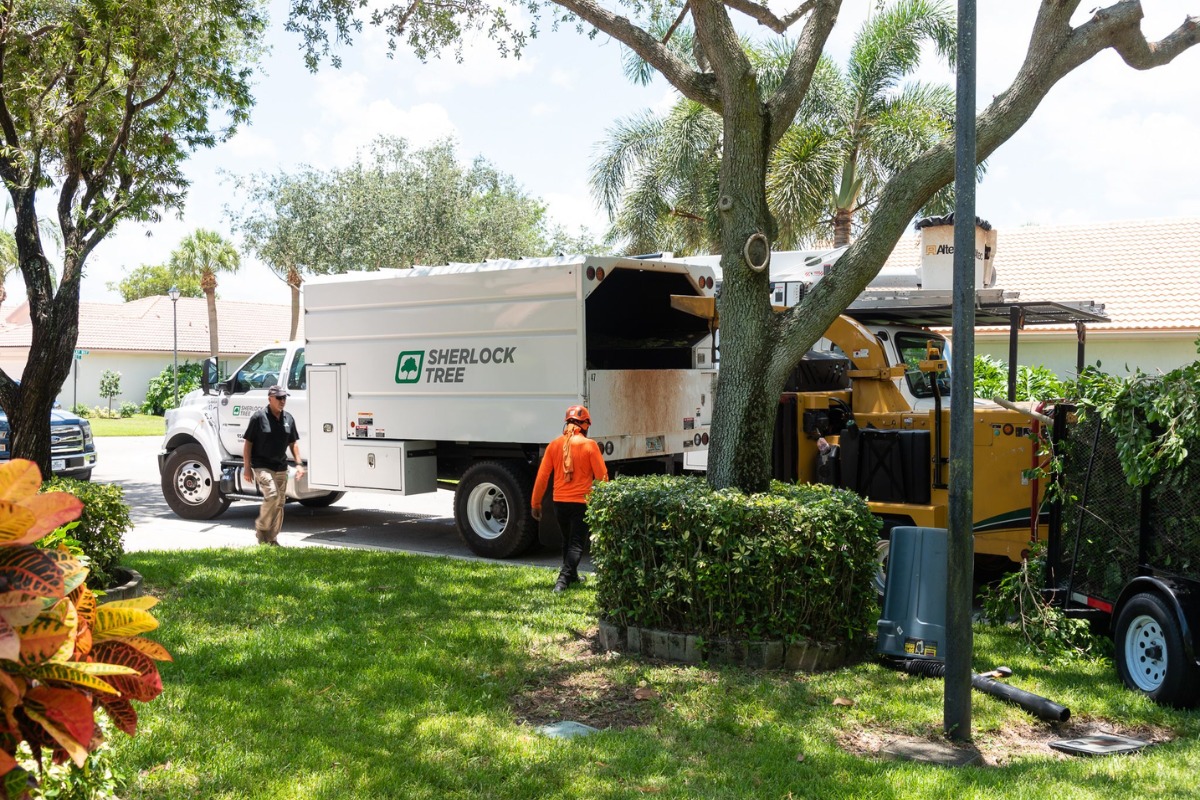
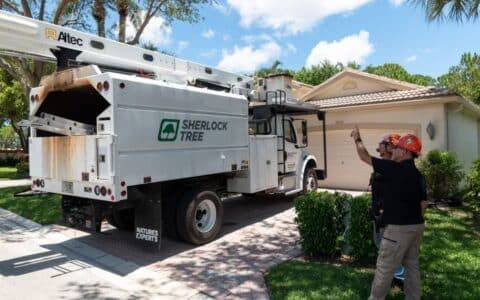
Sherlock Tree’s crews handle every step of hurricane preparation, from pruning to cleanup, so your property is ready before storm season begins.
Reduce Storm Damage Risk with Expert Tree Care from Sherlock Tree
Last year’s hurricane season was quiet, but that’s not something to rely on. Spring is your window to take care of inspections, pruning, and any necessary removals before June – because once storms are in the forecast, schedules fill up fast, options get limited, and small issues have a way of turning into expensive problems.
If you’re worried about how your trees will be able to handle high winds and heavy rain, the team at Sherlock Tree Company is ready to help. We’ll inspect your tree and perform timely pruning to help it withstand Florida’s unpredictable weather. Call us today at 954-480-1735 or request an estimate online.

Call Sherlock for quality tree services
Whether you're looking for specific tree care services, such as palm trimming, tree removal, or disease treatments, or would like one of our Arborists to examine your trees to identify any issues and recommend options, we're always here for you! Just give us a call at 954-788-4000 to set up an appointment.



SEE MORE ARTICLES
Looking for more?
We've got you covered with a monthly newsletter full of tips, resources, updates, how-to's, and other helpful information about trees and landscapes in South Florida!
