
That recent cold front that pushed temperatures close to freezing across South Florida didn’t just have homeowners reaching for coats – it had palms and tropical trees struggling to adjust. We don’t get many cold snaps here, but when we do, they tend to leave a mark. The damage isn’t always immediate, either. Sometimes it shows up weeks later when new growth stalls, fronds yellow, or tender species decline.
That’s why cold protection isn’t just a last-minute scramble. Preparing before the next front rolls through can mean faster recovery and less long-term damage to the trees you’ve spent years growing.
Key Takeaways
- South Florida trees can suffer cold damage even above freezing as rapid temperature drops cause more harm than the temperature itself.
- Tropical palms, fruit trees, and newly planted trees need the most protection; native species, like sabal palms and live oaks, generally don’t.
- These three steps prevent the most cold weather damage: water the morning before a cold night, mulch around roots, and protect sensitive plants with non-plastic frost cover.
- Never prune cold-damaged foliage immediately or fertilize before a freeze — both mistakes make recovery harder.
- When protecting palms, focus on the spear leaf (center growing point) — if it dies, the entire palm dies.

How Does Cold Weather Damage South Florida Trees?
Cold weather damages South Florida trees in three distinct ways: chilling injury, radiational freeze, and hard freeze. Each causes different types of cellular damage, and understanding the differences helps you know what to watch for after temperatures drop.
Can Trees Get Cold Damage When Temperatures Are Above Freezing?
Yes — and this phenomenon, called chilling injury, is the most common cold damage in South Florida. It can occur at temperatures as high as 50°F when the drop is sudden. The speed of the temperature change matters more than the temperature itself.
A rapid overnight plunge from 80°F to 50°F actually causes more cellular stress than a gradual decline to 40°F over several days. Tropical plants simply aren’t built to handle these abrupt shifts.
Why Do Leaves Freeze on Clear, Calm Nights?
Leaves freeze on clear, calm nights because they radiate stored heat into the sky faster than the surrounding air can replace it. Known as radiational freeze, this process can occur even when air temperatures stay above 32°F.
Without wind to mix warmer air from above, leaf surfaces drop below freezing while your porch thermometer reads 38°F. It’s the same reason your car windshield frosts over on clear nights — the surface radiates heat faster than the surrounding air can replace it.
What Happens to Trees During a Hard Freeze?
During a hard freeze, ice crystals form inside plant cells — not just on exposed surfaces, rupturing cell walls and killing tissue throughout the tree. This is the least common type of cold event in South Florida, but it’s the most damaging on the rare occasion it does occur because the entire plant is affected.
Which South Florida Plants Need Cold Weather Protection?
Tropical and non-native plants need cold weather protection, while Florida natives generally don’t. The key distinction isn’t just where a plant grows now — it’s where the species evolved.
Native Florida plants developed alongside occasional cold snaps over thousands of years and built in natural defenses. Non-native tropicals imported or brought over from Central America, South America, or the Caribbean, however, never experienced cold and thus have no way to cope when temperatures drop.
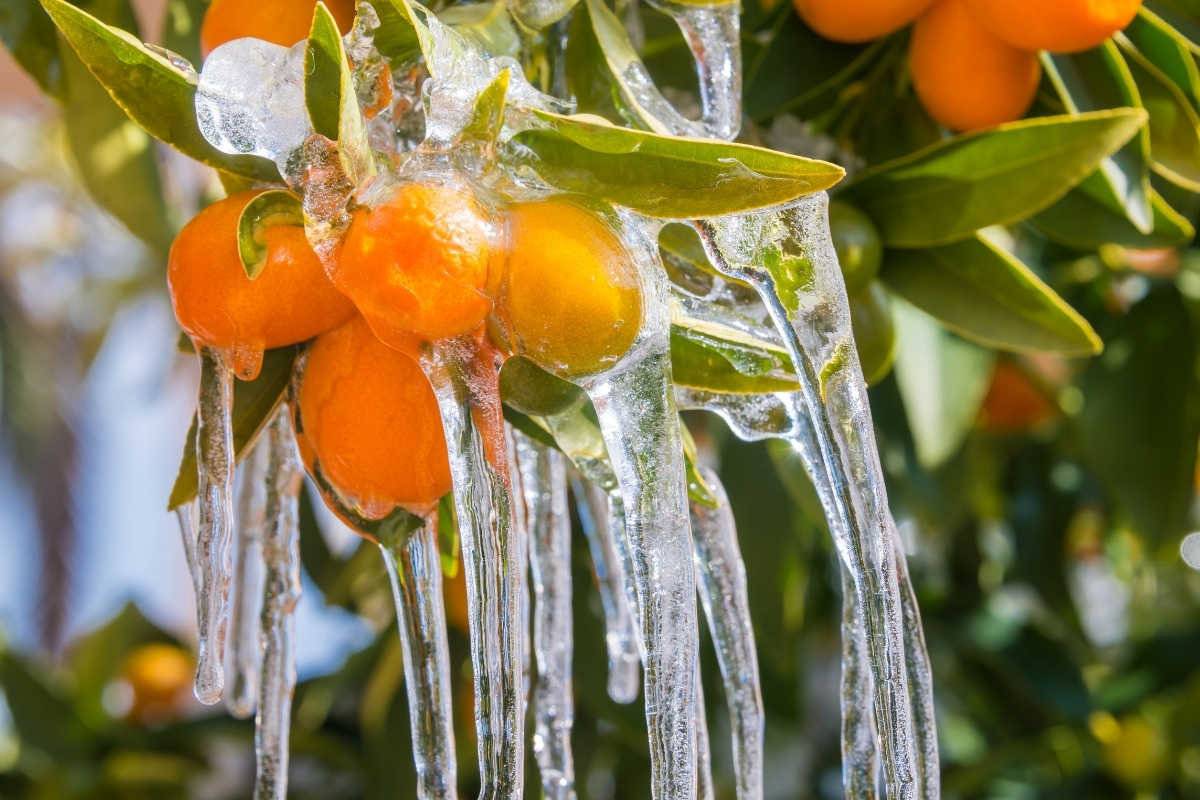
Commercial citrus growers use continuous irrigation during freezes — but this technique requires precise timing and equipment that can backfire for homeowners.
Trees and Plants That Need Cold Snap Protection
These are the most vulnerable plants to watch out for before a cold snap:
- Tropical Palms: Coconut, Bismarck, date palms, and adonidia (Christmas palm) are all cold-sensitive and can suffer damage when temperatures dip into the 40s.
- Tropical Fruit Trees: Mango, avocado, and citrus trees experience significant damage below 28°F, though cold stress begins at higher temperatures.
- Ornamental Tropicals: Crotons, Ti plants, bougainvillea, and hibiscus show damage quickly because their leaves have no cold tolerance.
- Newly Planted Trees and Shrubs: Any tree or shrub planted within the past year has an unestablished root system that can’t regulate temperature or recover as effectively.
- Container Plants: Roots in pots are surrounded by cold air rather than insulated by ground soil, making them far more vulnerable than the same plant in the ground.
Trees and Plants That Typically Don’t Need Protection
Live oaks, bald cypress, and sabal (cabbage) palms handle brief freezes without intervention. Established cold-hardy, native shrubs and groundcovers that have been in the ground for more than a year generally weather cold snaps on their own.
PRO TIP: Unsure about a specific plant? Check its USDA hardiness zone rating. South Florida falls in Zone 10a/10b — plants rated for Zone 9 or lower generally handle our cold snaps without intervention.
How Do You Protect Trees Before a Cold Snap?
Protect trees before a cold snap by watering the root zone, applying mulch, and covering vulnerable plants with a frost cloth. Start these steps 24 to 48 hours before temperatures drop for best results.
Water the Ground the Morning Before Cold Arrives
Water the root zone thoroughly the morning before cold weather arrives — moist soil absorbs solar heat during the day and releases it slowly overnight, creating a warmer microclimate around roots. Watering in the morning is important because it gives the soil time to warm before nightfall. This simple step makes a significant difference, especially for plants growing in South Florida’s well-drained sandy soils.
Apply 3-4 Inches of Organic Mulch Around Root Zones
Mulch insulates soil and regulates root temperature through cold nights. A 3- to 4-inch layer of organic mulch (like wood chips or shredded bark) acts as a blanket for the root system. Keep mulch several inches away from trunks to prevent moisture buildup and rot. Even if foliage suffers cold damage, protected roots allow faster recovery once temperatures warm.
Cover Sensitive Plants with Frost Cloth or Blankets
When covering sensitive plants, use frost cloth or blankets — not plastic, which conducts cold directly to leaves and causes more damage than no cover at all. Ensure the cover material reaches the ground and is anchored to trap heat radiating from the soil. Frost cloths outperform blankets, and blankets outperform sheets — but whatever you use, the key is sealing the cover against the ground. Always remove covers during the day to allow sun exposure and prevent condensation buildup that can lead to fungal issues.
PRO TIP: Think of covering plants like tucking in a bed — the cover traps warmth rising from the soil. If it doesn’t reach the ground, the heat escapes.
How Do You Protect Palm Trees from Freezing?
Protect palm trees from freezing by insulating the spear leaf — the newest, tightly furled leaf emerging from the center of the crown. Unlike trees with multiple growing points, palms have just one. If the spear leaf dies, the entire palm dies with it.
For smaller palms you can reach, tie fronds gently upward and wrap the head with frost cloth or burlap to insulate the bud. For tall palms you can’t safely reach, focus on what you can control — proper fertilization and avoiding over-pruning throughout the year give them the best chance of weathering cold on their own.
How Proper Care Makes Palms More Cold-Resistant
Well-fertilized palms show significantly less cold damage than nutrient-deficient ones, so palms that received proper fertilization throughout the year have a built-in advantage. Counter-intuitively, over-trimmed palms are more susceptible to cold damage — fronds protect the bud, and removing too many eliminates that natural insulation.
What Should You NOT Do During a South Florida Cold Snap?
Using plastic covers, pruning damaged foliage immediately, applying fertilizer before or after a freeze, and other well-intentioned cold weather protection efforts can backfire and cause more harm.
These common methods are actually more dangerous than the cold itself:
- Using Plastic Sheeting Directly on Plants: If you must use plastic, build a simple frame using stakes or tomato cages so the plastic doesn’t touch the foliage — even a few inches of air space prevents the plastic from conducting cold directly to leaves.
- Covering Only the Foliage (“lollipop” style): Draping a cover over just the canopy lets ground heat escape because the cover isn’t sealed against the soil. An anchored cover that reaches and seals against the ground is essential.
- Running Sprinklers All Night: This commercial citrus technique requires precise conditions and specialized equipment. Done incorrectly at home, it creates ice damage and wastes water.
Post-Cold Weather Mistakes That Slow Recovery
These post-cold weather mistakes slow recovery and can cause additional damage:
- Pruning Damaged Foliage Immediately: Dead leaves insulate and protect interior growth from additional cold events. Wait until spring growth appears before removing damaged tissue.
- Fertilizing Before or After a Freeze: Fertilizer stimulates tender new growth that’s even more vulnerable to cold. Wait until temperatures stabilize in spring.
- Prematurely Removing a Palm’s Spear Leaf: Even if it looks dead, wait. If the spear leaf pulls out easily with a gentle tug, the palm won’t recover. But if it resists, give it time — cold damage recovery can take months.
When Should You Call an Arborist After a Cold Snap?
DIY protection works for most situations, but some circumstances require professional expertise.
Signs you need professional help include:
- Large trees or tall palms you can’t safely reach or assess
- Uncertainty about whether damage is from cold, disease, or pests (symptoms often look identical)
- Palm spear leaf appears damaged – quick assessment prevents bud rot from spreading
- Multiple trees across your property showing stress simultaneously
- Damaged trees near structures, power lines, or pools where failure poses risk
An ISA Certified Arborist can accurately diagnose cold injury versus other problems, apply treatments like copper fungicide for palm buds at the right time, and give you an honest evaluation of which trees can recover versus which need removal. When you’re unsure, professional assessment prevents costly mistakes.
Frequently Asked Questions About Cold Snap Tree Protection
At what temperature should I cover my plants in South Florida?
Most tropical plants benefit from protection when overnight lows drop below 45°F, especially if the drop is sudden. Cold-sensitive species, like crotons and bougainvillea, may need covering even at 50°F. When in doubt, cover anything you’re not willing to lose.
How long does it take for trees to recover from cold damage?
Minor cold stress may resolve within weeks. Moderate damage often takes a full growing season, while severely damaged trees and palms can take 6-12 months to show clear recovery — which is why patience before pruning matters.
Should I bring potted plants inside during a cold snap?
Yes, when possible. Container roots are surrounded by cold air rather than insulated by ground soil. Move pots to a garage or covered patio, or cluster them against a south-facing wall and cover with frost cloth.
How do I know if my tree is dead after a freeze?
Scratch a small section of bark on a young branch – green tissue means it’s alive, brown means it’s dead. Test multiple branches at different heights. For palms, gently tug the spear leaf; if it pulls out easily, the palm won’t recover.
Does watering after a freeze help trees recover?
Yes, but carefully. Water lightly if soil is dry, but avoid overwatering – saturated soil compounds root stress. Wait until temperatures stabilize before resuming normal irrigation.
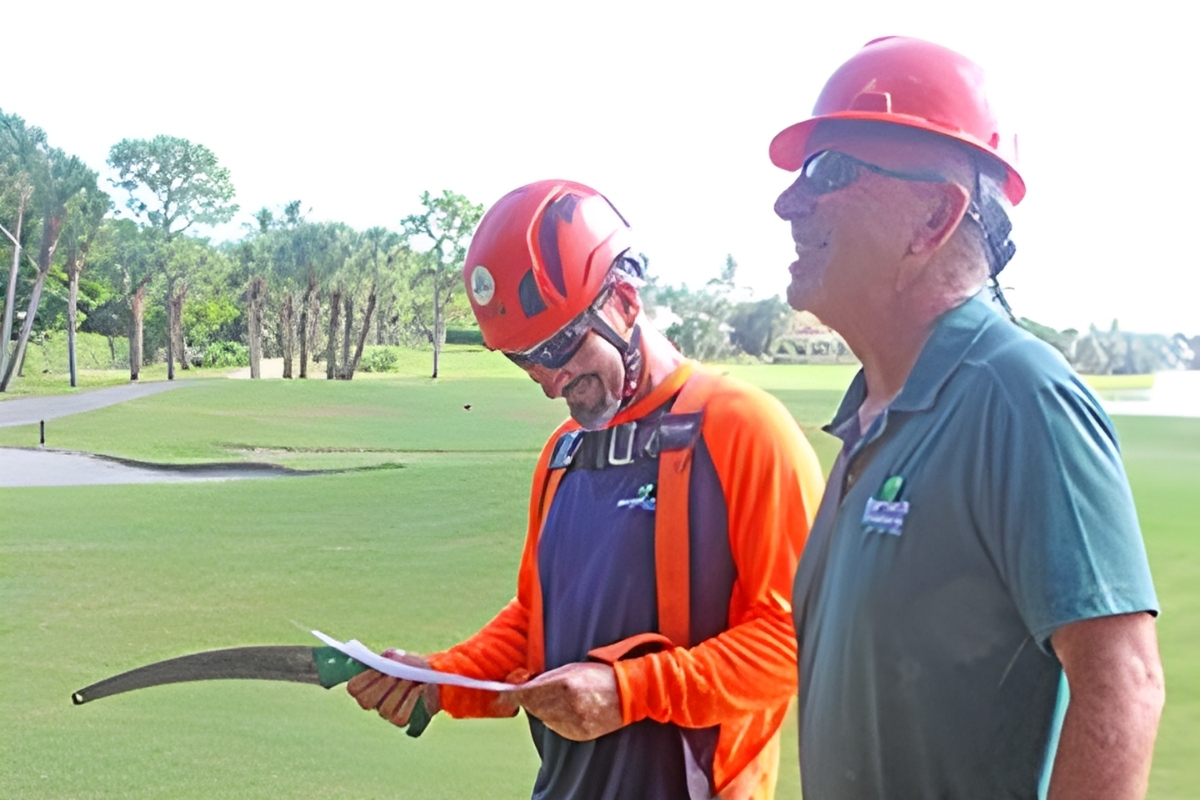
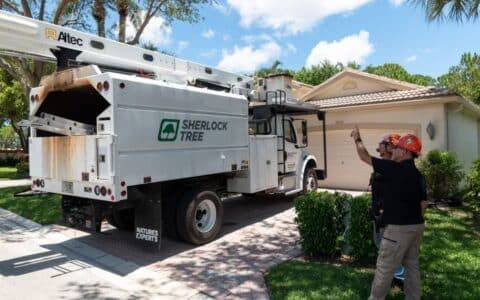
A Sherlock Tree arborist and crew member review a property assessment plan — professional evaluation helps identify cold-vulnerable trees before the next freeze.
Get Your Landscape Ready for the Next South Florida Cold Snap with Sherlock Tree
This year’s cold snap caught many South Florida homeowners off guard – temperatures dropped faster than anyone expected, and the scramble to protect plants at the last minute is stressful and often ineffective. South Florida cold events are rare but increasingly unpredictable, and the best time to prepare is before the next one shows up in the forecast.
A professional arborist can identify vulnerable trees, spot stress and nutrient deficiencies that make plants more susceptible, and recommend specific steps to protect your investment. Don’t wait for the next cold warning. Call Sherlock Tree at 954-788-4000 to schedule a landscape assessment – we’ll identify which trees need attention and help you prepare before temperatures drop again.

Call Sherlock for quality tree services
Whether you're looking for specific tree care services, such as palm trimming, tree removal, or disease treatments, or would like one of our Arborists to examine your trees to identify any issues and recommend options, we're always here for you! Just give us a call at 954-788-4000 to set up an appointment.


SEE MORE ARTICLES
Looking for more?
We've got you covered with a monthly newsletter full of tips, resources, updates, how-to's, and other helpful information about trees and landscapes in South Florida!
